Real Estate in the D.C.-Baltimore-Annapolis triangle, by Margaret Woda

Friday, December 29, 2006

On-line home searches

It's no secret that today's home buyers begin their home search online. But it's not just anecdotal -

According to the latest release from the Pew Internet & American Life Project, 51% of all Internet users had taken an online home tour as of August of 2006. This is an increase from 45% just two years ago, in November 2004. With growth like this, it's no wonder that real estate brokers and agents are going online to promote themselves and their listed properties.

Pew found that age, not income, is the best indicator of who will go online to search for a home: 27% of Internet users age 50-64 have looked at homes online, while 43% of users age 30-49, and 51% of users age 18-29. This suggests that perhaps brokers and agents should target their websites to tech-savvy young adults rather than more mature homebuyers - even though it may be more likely that mature homebuyers will have the resources to buy the expensive properties. (Perhaps I knew that instinctively, and that's why my new website - coming soon! - will have a flash slideshow, a do-it-yourself mortgage calculator and home search tools.)

Education is another indicator of likely online homesearchers: 46% of Internet users who are college graduates have looked at homes online; 38% of those who have some college, and just 34% of high school graduates. Online experience also factors into the decision to look online for a home: Those with 6 or more years of online experience are 50% more likely (45%) than those with 4-5 years experience (30%), and nearly double those with less than 3 years experience (23%).

There are many more facts and figures in the full Pew Report published earlier this month by Senior Research Fellow Deborah Fallows. But this is not the last, or only, word on this topic.

Market Research finds buying power is hiding in empty nests, according to an article released on December 6 in Houston by The Media Audit. Among other things, the article reports that the Internet, along with newspapers, dominates the media interest of this group. So perhaps there is an online target market for real estate brokers and agents, after all, for more mature Internet users. As Tim O'Keefe says, in his real estate marketing blog, it's a little like "eggs are bad, then they are good for you type of thing."

The National Association of Realtors surveyed actual home buyers in 2003, rather than Internet users in general (as Pew did), and found that 71% began their home searches online. Given the growth in Internet use over the past 3 years, one can reasonably surmise that the number would be greater in a similar study today.

The bottom line, of course, is that online home searches are here to stay. It is my goal to make the most of this phenomena by developing a truly effectivce real estate website. I'd be very interested in hearing YOUR input about what you'd like to see in a broker or agent's website, so that I can incorporate it into my new and revised website which is now in development.

Other links:

Feedback or more information:

On-line home searches

Copyright 2006. All rights reserved. Margaret Woda

Thursday, December 21, 2006

December Update - New real estate newsletter

If it seems to you like all the real estate economists are forecasting doom for the market, take a look at REAL TRENDS - DEC. 2006, which I'm sharing with you today. It may help you separate fact from fiction; it will, at least, provide some interesting reading for anyone who may be interested in real estate, whether you are a real estate professional, homeowner, investor or potential buyer.

I had intended to piggyback on some of these articles and insert my own 2 cents, but it's fairly lengthy. Why don't you take a look, send me your comments, and I'll decide from there which elements of the report to expand upon in future blogs.

This update is published by the Metropolitan Regional Information System (MRIS), a regional multiple listing service owner by local associations of REALTORS in the Middle Atlantic states.

REAL TRENDS - DEC. 2006

For feedback or more information:

December Update - New real estate newsletter

Sunday, December 17, 2006

All Offers Are Not Created Equal

After weeks of preparation, agonizing over the pricing decision, the inconvenience of showing your home… you finally get that phone call you’ve been eagerly waiting to receive. “There’s an offer on your home!” Now what, you ask yourself.

There are a number of issues to consider when you evaluate any offer on your property. For example:

Price

Price is always the first thing that homeowners want to know about an offer. How close is the offer to your asking price? Remember, the bottom line is actually more important than the sale price. For that reason, estimating your net proceeds is an essential element when considering whether to accept any offer. You may also wish to consider the strength of the market – ask yourself how likely it is that another buyer with a “perfect” offer is just around the corner. In a seller’s market, you can be more picky; in a buyer’s market, you’d better work with any offer you receive to reach an agreement.

Contingencies

Virtually every home purchase contract has some contingencies, and many of these are extremely reasonable. But it's important to consider the potential impact of these conditions. It may be advisable to accept a lower price with few contingencies over a higher figure with a large list of conditions.

Financing is a contingency that appears in nearly every contract – if the buyer cannot obtain financing for any reason, the contract will terminate. You will find an appraisal contingency in most contracts – if the property does not appraise at the agreed upon sale price, it’s back to the drawing board! Another common contingency is a home inspection; while this is a reasonable contingency, it can become a starting point for renegotiating terms of the contract.

Some contingencies can be very risky, such as a home-sale contingency. In this case, a home seller simply trades the risk of selling his own home for the risk of selling a different one - and with far less control over factors which impact the sale of the buyer’s current home. There must be a compelling reason (or two or three) for even considering a home-sale contingency, let alone accepting one as a condition of your home sale.

Buyer's Qualifications

Since it is unusual for homebuyers to have a suitcase full of cash for purchasing your property, a pre-approved buyer is the next best thing. It is important to distinguish between pre-approved and pre-qualified buyers, so let me explain the difference: Pre-qualification is simply an opinion of whether the buyer appears credit-worthy, as opposed to pre-approval which is based upon verification of the buyer’s income, assets, and other obligations.

Please keep in mind that even a pre-approval is not final, however, because it will always be subject to an appraisal of the property and possibly certain inspections.

Seller's Concessions

A buyer may ask you to pay some or all of their closing costs; to include some personal property such as window coverings; to make changes to the property such as restoring a finished garage to its original state; to allow the buyer to occupy the property prior to settlement. Concessions such as these could mean the difference between selling your property or keeping it on the market for several more days, weeks or months.

You will have to consider each request to determine how it impacts your home-selling goals. It’s possible that a buyer would ask for several concessions that you are more than willing to make in order to sell your home. However, you are not obligated to make any concession that isn’t offered in your initial listing for the property.

Multiple Offers

If you are fortunate enough to receive multiple offers, review each one carefully and rank them based upon pre-determined factors such as the bottom line, timing, buyers’ financial qualifications and the presence or absence of contingencies and concessions. Once you decide which contract offers terms most closely aligned with your priorities, begin negotiations with that homebuyer. If agreement cannot be reached, move on and negotiate with another homebuyer. Just be careful not to negotiate with more than one homebuyer at a time, because you only have one house to sell, and you don’t want to end up in court.

Your Response

You have three choices when you receive an offer: accept it, reject it, or make a counter-offer. Frankly, it is rare that home sellers receive a “perfect” offer than can be accepted without any negotiations, but it does happen occasionally. I’ve even had sellers who received thousands of dollars over the asking price, no contingencies (not even financing or appraisal), and perfect timing. But don’t count on this happening – especially not in a buyer’s market.

I rarely recommend rejection, even when an offer seems outrageous, and even when it’s a seller’s market. Some buyers and buyers’ agents use a strategy of testing the priorities of home sellers by offering an extremely low price and asking the seller to accept multiple contingencies and concessions. You have nothing to lose, except a few minutes, by making a genuine counter-offer that reflects the bottom line you will accept. At least this keeps the door open with this buyer for future more realistic negotiations.

Most buyers make an offer in good faith, asking only for concessions and contingencies that reflect the buyers’ priorities. More often than not, we can compromise and reach agreement. If you are my client, I will help you craft a counter-offer to satisfy your goals as well as those of your prospective buyer.

For feedback or more information:

All Offers Are Not Created Equal
Source: Margaret Woda
The GoHomeNetworks, Inc.
Metropolitan Regional Information Systems, Inc. (MRIS)

Monday, December 11, 2006

How much house can you afford?

Throw out all those magic formulas you heard about for calculating what price home you can buy. The truth is that there are many factors which go into the answer to this question. You cannot rely upon the online calculators, either, because different lenders have different programs and criteria that the calculators do not take into account, and the criteria may be flexible.

The best way to find out how much house you can afford is to touch base with me and my financial partners – or an experienced loan originator of your choice. In the meantime, here are the factors that impact the answer to "How much house can you afford?":

Down payment

The amount of cash that you invest, together with your loan amount, will equal the price of the house. The larger your cash down payment, the more house you can buy, and vice-versa. That being said, housing is not a liquid investment; it is necessary to sell, or at least re-finance, to take cash out of your home once it is invested.

For this reason, most people make a down payment no greater than 20% of the purchase price. Some homebuyers put down as little as 5% or even no money at all. It is important to know that borrowers who put down less than 20% may be charged an extra closing cost and/or monthly fee known as Private Mortgage Insurance (PMI), which protects lenders against loss if a borrower defaults. My lender partners usually help my clients obtain a loan with minimum down payment and no PMI charge – but this is an exception rather than the rule in the mortgage market.

Generally speaking, the down payment should be your personal funds such as savings, insurance proceeds, investments, equity from a previous home, or a gift. As part of your loan application process, your lender will verify your assets to confirm that your down payment is not borrowed money; if your down payment is a gift, the donor will be asked to provide a letter stating that no repayment is required or expected.


Credit qualifications

It’s a good idea for you to
obtain a credit report in advance of making loan application so you can identify any inaccuracies and report them to the credit bureau(s); it could take 30-45 days for any inaccuracies to be verified and corrected on your credit report. If you do this several weeks before you start shopping for a home and mortgage, you may save time in the mortgage loan processing, which could be delayed if inaccuracies are not discovered until the lender orders your credit. While doing this is desirable, it is not required, and most people do not have inaccuracies on their credit reports.

Your credit-worthiness is indicated by the FICO Score on your credit report; borrowers with higher scores will have more loan programs to choose from and a better interest rate than borrowers with a lower score. My lender partners have a knack for finding the best loan for each of my clients – whether they have a recent bankruptcy, no credit at all, or the best credit in the world. Don’t let concerns about poor credit stop you from pursuing home-ownership because I’ve helped many clients overcome this obstacle to buy a home!

Monthly payment

The monthly payment for which you qualify depends primarily on these factors:

  • Monthly income and obligations are measured against your gross income to make sure your mortgage payment does not exceed your ability to pay. First, your housing expense (PITI) is calculated as a percentage of your gross income (before any deductions), and then your total debt obligations (including your housing expense) are calculated as a percentage of your gross income. For example, if the ratios required for a loan are 28/36, that means your housing expense (PITI) cannot exceed 28% of your gross income and your total debts cannot exceed 36% of your gross income. The ratios permitted will vary from one loan program to another – some are more liberal than others.
  • Current interest rates will significantly impact the amount of your home loan because just 1% could make it harder to achieve the required ratios. As interest rates increase, more creative mortgage loan programs become available to help homebuyers cope with the situation. For example, adjustable rate mortgages (ARM) or buydown mortgages. You can trust my lender partners to work with you to obtain a loan that works for you, whatever the interest rates may be. Whenever interest rates come down, you can refinance at minimal cost to take advantage of an improving market.
  • Taxes, Insurance and Condo/HOA fees will be included in your totally monthly payment. For that reason, it may be prudent to purchase in a community with lower costs, assuming the purchase prices are equal.

Generally speaking, I am not a fan of online mortgage mills which may have a fancy website, but may be operated out of someone’s garage in Iowa or Pakistan. Local lenders work every day with appraisers who know this market well, who provide prompt turnaround and can be counted on for all of the background information required by the firm’s loan underwriter. And local lenders work on a first-name basis with local title companies to handle all the paperwork for your settlement.

It has been my experience that working with a local lender is the best way to determine how much house you can afford. If any lender quotes you significantly lower closing costs or interest rate, you can be sure that the loan will come with hidden costs that more than make up for any savings. Disreputable lenders rely upon the fact that you may not know what questions to ask, and even some credit unions rely upon your loyalty over common sense.

Instead of relying upon the Internet, online do-it-yourself calculators, or obsolete “magic formulas” to determine how much house you can afford, obtain a reliable answer from a local lender, or contact me through my website.

For feedback or more information:

How Much House Can You Afford?
Copyright 2001. All rights reserved. Margaret Woda

------------------------------------------------------------------

Thursday, November 30, 2006

Feedback Regarding Real Estate Fees

Yes, I was one of many real estate professionals who responded to "Last Stand of the Six-Percenters", a posting (based upon a New York Times article with the same title) that appeared on brokeragentnews.com a few weeks ago.

A follow-up article appeared today, containing responses from many other real estate professionals who feel as strongly as I do about the value of my professional services, compared to a typical discount real estate agent or firm. (My response is not in the follow-up article, but I couldn't resist adding a few words to one agent's comments and additional comments are added after this article.)

Please note that this is NOT to say that I, my company, or anyone quoted in this article charges 6% or any specific fixed fee, because fees charged by real estate agents and companies are negotiable; real estate fees are not fixed by law, custom, or the policies of any organization. Reference to the 6% figure is ONLY to the article's title.

The principal under discussion is this: Quality real estate service at a higher price or minimal real estate service at a lower price. I think you would agree that you can buy a better quality shirt at Nordstroms for a higher price than you can for a lower price at Kmart or Target. Replies in the following article are a defense of high quality real estate services to the public in the face of competition from discounters that provide little service, if any.

Here's the article (and please feel free to provide your feedback regarding this topic):

Online Marketing: Agents Sound off About How to Combat Discounters
by Michael E. Parker
BrokerAgentNews.com

A recent article we wrote attracted more customer feedback than any other we have ever written. That article, "Last Stand of the Six Per-centers" - taken from an article of the same title in the New York Times - seemed to strike a chord with so many professionals that it seemed some of their excellent ideas for how to combat the tactics of discounters should be shared with everyone reading this column.

Before doing so, however, first, let me thank you all for taking the time to respond and for agreeing to share your good ideas with others. Comments received were overwhelmingly favorable (you can read that article by
clicking here.

Although I'd like to publish everyone's comments, there isn't enough space available to do so. We received only two negative comments: one started out, "you are a fool" We won't be quoting that one! Another accused us of offering opinion without factual back up; it's like the writer did not believe in the practices of the discounters we cited. We sent that writer a reference to validate that we did not make it up. Here, then, (with some editing and rephrasing done by us) are points to ponder when resisting discounters:

The liability issue.
"I believe agents are also not emphasizing the value of their liability reduction strongly enough. These "fly-by-night" discounters are here today and gone tomorrow. It might not be a matter of "If you get sued" it's more like "When you get sued." If a seller happens to be hit with a lawsuit over the sale, that seller had better hope that the broker is still in business so that someone else is helping defend them. How can any discounter be on top of local disclosures, local codes, cc& r's, and how could any generic discounter who is not involved in the community protect the seller?" - Loren Prentice, a RE/MAX agent from Southern California.

Making the distinction between yourself and ordinary agents.
"Most agents are not working full time, nor are they good at what they do. The barriers to entry are minimal and there is no regulation of the industry: anyone can print up a card that says "real estate agent" and demand to be treated equivalently to a real professional. Your prospect needs to know that you are NOT barely hanging on by your fingernails, but that you are prospering, even in the hard times, as all true professionals manage to do. True professionals seem to have no problem generating enough business to make a healthy income. For those who cannot, that's the nature of competition." -
Brian Short, a C21 Agent from Idaho.

Letting the prospect know the damage done to them by discounters.
"Heavy discounters often cut the co-broker commission. How many agents are going to emphasize a home with a __% commission when the market is flooded with homes at a higher commission rate? When this happens, often the home - unbeknownst to the seller - is doomed to have the listing expire unsold, or take forever to sell because other agents won't emphasize that property to their clients. It's one thing to negotiate a lower fee for yourself and agree to do the full job, but to think that the other side of the transaction will accept that is unrealistic." - An Independent realtor in Jacksonville, Florida

Create value in everything you do for the consumer.
"I manage a Coldwell Banker office in Ventura, CA and it's a constant struggle to maintain our fees in the marketplace. Commissions of __%, __% and even a flat fee are always available. I constantly remind my agents that they must create value in everything you do for the consumer. The consumer doesn't understand what we do and they cannot relate to the hard work encompassed in selling property, especially in a hard market. All they see is the large commission on the listing agreement. While it is true that some agents do not deserve a full fee for what they do, my agents know that if they are going to expect to earn a full fee that they must now their market better than competition, offewr outstanding service and creative marketing techniques and be skilled and savvy about the entire process, from marketing, to negotiating to closing escrow. That's what the consumer deserves, and if they got it more often, there would be no discounters." -
Jeff Haring, a Coldwell Banker Branch Manager in Ventura, California

Remind the consumer that fees have not increased in 50 years! "Real estate commissions have always been __% in my area, whether the home sold for $15,000, $150,000 or $1.5 million. Sellers have traditionally seen the value in that because they know that a Professional real estate agent is ethically and morally giving them services that they can trust. Houses were not meant to be piggy banks; rather, they are your place to call home. As home prices have increased, so has the cost of living and the amount of commission that represents. Nonetheless, it's the same percentage as back when homes cost $15,000 and a good job was one that paid $10,000 a year. Virtually every professional service has increased proportionately to the rate of inflation and the decline in purchasing power of the dollar. What sellers need to consider is that it has become more difficult and expensive to market homes properly and to call attention to them just for viewing, because inventories have doubled - or even tripled - in some areas. Buyers need to be reminded that they get what they pay for, and that a __% commission is a good value when negotiating all that comes with buying or selling a home these days. Besides, how many sales generate the full commission to one party? The buyer should know that the commission is usually split FOUR ways, and that while the commissions can appear handsome, the work necessary to earn them requires professionalism (plus a hefty financial investment, extensive training, a strong support team and very long hours)." - Chris Weingert of Hanson Realty (additional comments added by me)

Point out that you are the consumer's partner in the transaction. "Our management services include much more than shuffling paper! Try managing a divorcing couple in a transaction without being there in front of them. It's almost impossible to do on line. Who is going to answer the phone at 10 p.m. to answer questions that keep the buyers awake at night? Who will save the deal when buyer's remorse sets in?

It's true that our services come at a cost, but experience and knowledge become invaluable whenever the doo doo hits the fan, and it hits the fan a lot more often than people may think. We put out fires before they become emotional, psychological and financial conflagrations. Paper factories can't and won't do that. Just wait until the banks are wining and dining us again because their REO's are again forcing them to open a special department just to deal with them. So, today, it seems to be discount services in exchange for a fast buck and volume.

Those of us who have been through the 80's and 90's have learned some valuable lessons, and among those lessons, none stands out more than this one: It takes a lot more than a paper shuffle to hold a transaction together when interest rates climb, when the market is flooded with properties that aren't selling: it takes a real professional realtor. It is only then that consumers seem to recognize that the value of our services is true and justified." - Clay Madisen, Leadingham realty

Take advantage of this tremendous opportunity for skill to work. "I remember talking with our of our office's veteran producers when she said "I just can't justify charging my customer six percent. Prices have gone up so much it just isn't fair!" 'Fact is, she was depressed. We talked and I reviewed the marketing plan for the property. I suggested a professional photographer, a virtual tour with music. I pulled comps, found that: 1) Nothing was moving in this area; 2) Everything else was __% to the selling office; 3) Most of the listings seemed to be overpriced, perhaps to make up for the slashed commissions. We applied the marketing, we lowered the price a little bit, and we raised the commission to __%. Two weeks later, the property was in escrow.

The moral to the story is that you are not only charging __ percent because you are worth it, you are doing so in order to get the listing to stand out to the buyer's agents! CAR says that a majority of the time, an agent brings the buyer. We have over 2800 listings, yet only 400 sold last month. It stands to reason that if you do not discount, and make the listing stand out to the buyer's agent, it will be looked at more and have a better chance to sell. It's money that motivates people to work, not discounts!" -
Keith Sorem, KellerWilliams in Glendale, California

Use technology to make yourself stand out from the crowd. "Despite a dramatic fall-away in the market this past year (sales in the area down 1/3, and prices down about 15%), I have gone from $10m of sales in 2005 to $12m closed and $2.6m still scheduled to close in 2006. Median sale price of homes in my area is about $275k (though I achieve above that). I work on my own, no assistant or "team". I rely heavily on technology (I am also a member of the Allen Hainge Cyberstars), but keep the personal touch, and nearly all my business comes from referrals, repeat business, and my website.

I had one of those "weak" agents ask me a few weeks ago "how have you managed to do so much business with this market" and I simply replied "service and reputation". He said "nah, it's just because of your website". Well yes, that's all part of it. My website is part of the service (great marketing, virtual tours, Client Service Center [Settlement Room] ) and helps attract the new business, but it's the personal touch, experience and expertise that they all appreciate and retains them, brings them back, or encourages them to refer others." -
Chris Laurence, RE/MAX Choice, Front Royal, Va.

Remember that for all the high tech, a big part of it still is about prospects finding you on the Internet and your having a presence there. "I listed and sold 32 listings in my area's most exclusive area last year. My buyer's agent had 90% of his buyers come off the Internet last year. One client from San Francisco found me through the Internet and drove up here and bought a home on the golf course and five acres of salt waterfront.

I am convinced that being able to show prospects my Internet presence and relate to them the tie-in to how many transactions start on the Internet is a big factor in closing listing transactions at full commission. Once people see that you spend the money to succeed, they want to have you working for them and they understand that the money paid in commission is spent, in part, on finding them a buyer." - An independent realtor in Seattle, WA.

So, there you have a small portion of the ideas that were floated by readers last week. I can't tell you how many people took the time to write and say something like this:

"The bottom line is that you get what you pay for. I am proud to be a Realtor and take my job very seriously. I am a professional who expects to work hard for my client and do a good job to take care of his/her needs in real estate. I earn my commission. It's too bad the public is constantly being fed a line that we are expendable and that what we do could be done by a clerk." - Diane Gomez Re/Max Austin Associates, Austin, Texas

I think there are probably a lot more ideas out there, but they all seem to be a variation on one thing: It's up to us to let our prospects and customers know how valuable what we do is to them when buying or selling a home. It's a little like the self esteem issue that so many face in adolescence: If we don't value ourselves highly, how can we expect anyone else to do so? It's my personal opinion that if discounting were the answer, no fortunes would have been made in real estate. As we've said before, oats have two prices: one before the horse eats them, and one after the horse eats them. Commissions are a quality issue. Prove yourself worthy, and they will come.
-------------------

Now I'm going to add my comments, and I hope you will feel free to add your own feedback.

I'm in the business of creating success stories for home buyers and sellers - not churning out computer data to them so they can approach one of the most important business transactions of their lives from a position of inexperience and ignorance.

Did you ever hear the expression "You have a champagne taste on a beer budget"? It refers to people who want the best but can't or won't pay for it. Yet, even among champagnes and beers, you will find variance in quality with accompanying variances in pricing. The bottom line, of course, is that you get what you pay for!

Real estate agents who invest in advanced training, state of the art technology services, strong support teams, attractive office environments in convenient locations, helpful brochures and up-to-date real estate forms, and personal service are worth more than licensees who operate out of their garage with little more than a web presence to offer consumers. Consumers usually pay more in the long run to use a discounter because they go into negotiations without the advantage of an experienced real estate professional to advise and advocate for them.
If in doubt, just read some of the client success stories on my website.

Okay, now you're read what real estate agents say about their value; would you like to comment?

-------------------------------------------------------
Additional articles on the topic:

Last Stand of the Six-Percenters. NY Times
Seller Unhappy with Discount Broker. Realty Times
What do Agents Really Bring to the Table? Realty Times
Study: 83% of Sellers Use a Full-Service Broker. REMAX.net
Are Full-Service Real Estate Agents Worth the Extra Money? Elizabeth Weintraub


For feedback or more information:

Feedback Regarding Real Estate Fees

Source: Broker-Agent News

Monday, November 27, 2006

Maryland - more than you ever wanted to know!

While collecting information for my new website (watch for my announcement around the end of December), I came across a lot of random information and links about all things Maryland to share with you.

For example, do you know how Maryland got its name? The charter that Lord Baltimore received from King Charles I of England specified a name for the new colony - It was to be called Maryland to honor King Charle's wife, Queen Henrietta Maria (Queen Mary).

I also learned that Maryland has more than one nickname:

The Old Line State
This nickname is a reference to the Maryland soldiers who fought courageously in the Revolutionary War, the Maryland Line. It is said that General George Washington referred to these soldiers as "The Old Line." Maryland was the only state that had regular troops "of the line" and these soldiers were ranked among the finest and best disciplined in the army.

This nickname is sometimes given another origin that goes back further in history. It is said that Maryland is referred to as "The Old Line State" because it was the dividing line between the land grants given to William Penn and Lord Baltimore.

The Free State
This nickname originated in an article written by Hamilton Owens, the editor or the Baltimore Sun. In 1923, a Georgia Congressman, William D. Upshaw, attacked Maryland as a traitor to the union because it never passed a State enforcement act supporting Prohibition. Hamilton Owens' article, "The Maryland Free State" was a mocking response to Mr. Upshaw, suggesting that Maryland should secede from the Union before acting to prohibit the sale of liquor. This article was never published but Mr. Owens referred to Maryland as "The Free State" in later editorials.

The Cockade State
This nickname, coined during the Revolutionary War, again refers to the Maryland soldiers. According to King's Handbook of the United States, 1891, the Maryland Old Line was made up of young men who "...wore brilliant cockades". Cockades are badge-like ornaments usually worn on hats. These decorations inspired Maryland's nickname, "The Cockade State."

The Monument State
In the early 17th century, Baltimore was given the nickname of "The Monumental City" and this nickname was transferred to the state over time.

"The Monumental City" was bestowed upon Baltimore by President John Quincy Adams, probably in reference to the monuments he saw on his visit to the city in 1827. The "Battle Monument" honoring Baltimore's defensive victory in the War of 1812 was standing on the site of the old court house. Construction was under way on the first major memorial to George Washington. President Adams was also taken to North Point to view the Aquila Randall Monument erected to honor a member of the First Mechanical Volunteers of the Fifth Regiment who was killed on September 12, 1814.

At a dinner engagement, Adams thanked the citizens of Baltimore for the kind reception he had been given during his visit and proposed a toast" "Baltimore, the Monumental City--may the days of her safety be as prosperous and happy as the days of her danger have been trying and triumphant!"

The Oyster State
This nickname refers to the large oyster fisheries in the state.

The Queen State
Probably because Maryland was named after Queen Henrietta Maria, Maryland has been referred to as "The Queen State."

Here are the Maryland State Symbols:
Bird: Baltimore Oriole (Icterus galbula), 1947
Boat:
Skipjack, 1985
Cat: Calico Cat, 2001
Crustacean:
Blue Crab (Callinectes sapidus Rathbun), 1989
Dinosaur: Astrodon Johnstoni Fact Sheet 12 from the Maryland Geological Survey, 1998
Dog: Chesapeake Bay Retriever, 1964
Drink: Milk, 1998
Fish: Rockfish or Striped Bass (Morone saxatilis), 1965
Flag: Find out more, 1904
Flower: Black-eyed Susan (Rudbeckia hirta), 1918
Folk Dance: Square Dancing, 1994
Fossil Shell: phora gardnerae gardnerae (Wilson) Fact Sheet 6 from the Maryland Geological Survey, 1994
Gem: Patuxent River Stone, 2004
Great Seal:
Find out more, 1876
Horse: Thoroughbred Horse, 2003
Insect: Baltimore Checkerspot Butterfly (Euphydryas phaeton), 1973
Reptile: Diamondback Terapin (Malaclemys terrapin), 1994
Song: Maryland, My Maryland". 1939
Sport:
Jousting (Maryland Jousting Tournament Association), 1962
Team Sport: Lacrosse, 2004
Tree: White Oak (Quercus alba), 1941

Many more links:

·
Maryland – the official website
·
Annapolis - the state capital (and “sailing capital of the world”)
·
Maryland Area codes
·
Maryland Climate
·
Maryland Geography
·
Maryland’s 10 Largest Cities
·
Maryland Maps
·
Maryland Motto
·
Maryland News
·
Maryland Topography Image
·
Maryland Weather Conditions

Maryland Government
·
Maryland Constitution.
·
Maryland Counties
·
Maryland General Assembly
·
Maryland Judiciary
·
The Maryland State House

Maryland Services
·
Maryland Birth Certificates
·
Maryland Board of Elections
·
Maryland Death Certificates
·
Maryland Driver Licensing Information
·
Maryland Libraries
·
Maryland State Lottery Agency
·
Maryland Marriage Certificates
·
Maryland Veterans Affairs
·
Maryland Vital Statistics Administration

Maryland History:
·
Maryland at a Glance: Historical Chronology
·
America's Story: Maryland
·
Maryland History
·
Marylanders in History
·
Maryland Government History
·
Maryland Historical Society

Maryland Economy:

Agriculture: Livestock products comprise the bulk of Maryland's farm income. Broilers (5 to 12-week-old chickens) are Maryland's leading farm product, followed by milk. Other livestock products are beef cattle, eggs, hogs and turkeys. Most of the rest of Maryland's farm income is from greenhouse and nursery products (flowers, ornamental shrubs, young fruit trees). The state's leading field crops are corn, soybeans and wheat. Other field crops are barley, hay and tobacco. The most important vegetables are sweet corn and tomatoes. Apples are the biggest fruit crop. [
Find out more]

Manufacturing: Computer and electronic products (communications equipment, surveillance and navigation instruments) are Maryland's most important manufactured products. Food processing (soft drinks, alcoholic beverages, poultry products, spices, bread) ranks second. Chemical production (soaps, other cleaners, pharmaceuticals, paint) ranks third.

Services: Community, business and personal services such as private health care (doctors offices, private hospitals) and support services for business/government (computer programming, consulting, data processing, janitorial, security) lead in the services sector. Finance, insurance and real estate ranks second. Baltimore is a leading financial center in the eastern United States. Government services (operation of public schools, hospitals, military activities) is Maryland's third-ranking service industry.

Mining: Crushed stone, used in the construction industry, is the most valuable mined product of Maryland. Other mined products are limestone, marble, sand and gravel, coal, natural gas, clay, peat and portland cement

Fishing: Maryland is a leading state in the production of blue crabs. Other products are Atlantic croakers, catfish, clams, crabs, menhaden, oysters, scallops, striped bass, flounder, white perch, swordfish and tuna.

· Fishing in Maryland
·
Summaries of Maryland Fishing Rules
·
Fishing Licenses In Maryland

Well, that’s about all the information I can handle for one day. If you’re planning a visit to Maryland, and want more travel information, I recommend http://www.mdisfun.org/ for information published by the Maryland Office of Tourism.

Sources:

For feedback or more information:

Maryland - more than you ever wanted to know!

Crofton Maryland Real Estate

Copyright 2006. All rights reserved. Margaret Woda

Sunday, November 19, 2006

More on the Maryland Market

Third Quarter data has been released by the Metropolitan Regional Information System, Inc. (MRIS), the regional multiple listing service (MLS) for 25 local Associations of REALTORS in Washington, D.C., Maryland, Virginia, Delaware, Pennsylvania and West Virginia. Based upon this information, I’m going to provide you with a glimpse of real estate trends in Prince George’s County – a suburb of Washington, D.C. – and, more specifically Bowie, on the eastern edge of the county adjacent to Anne Arundel County.

Before we get started, though, I’d like to refer you again to articles by
Ken Fears, David Lereah, and Lawrence Yun which I mentioned in my earlier blog about Second Quarter data for Anne Arundel County and Crofton. I’d also like to point out again that this information was obtained from data released by MRIS, and therefore includes only properties listed on the MLS. It does include all forms of residential property, i.e. single family homes, town homes, condos and co-ops.

In Prince George’s County, as a whole, average sold prices remained steady from the same period last year – $342,200, up from $341,500. In Bowie, the average sold prices for the 3rd quarter were $379,000 in 20715 (-1.33%), $335,500 in 20716 (-.94%), $513,900 in 20720 (+15.17%), $474,900 in 20721 (-.69%), and $320,200 in 20722 (+16.86%).

Countywide, 3,281 homes sold this quarter, down from 3,653 in the 3rd quarter of 2005. In Bowie, the drop in number of sales was more dramatic: 129 in 20715 (-24.56%), 146 in 20715 (-12.57%), 100 in 20720 (-21.88%), 90 in 20721 (-20.35%), and 26 in 20722 (+8.33%).

Days on Market have increased only slightly on a countywide basis – from 32 in the 3rd quarter of last year to 40 this year. I think this is remarkable, given the “buyer’s market” nationwide and even statewide. However, Bowie sales have taken longer: 48 days in 20715, 39 days in 20716, 60 days in 20720, 53 days in 20721, and 44 days in 20722 – a significant increase from last year throughout Bowie.

Home sellers in the Bowie have apparently faced the reality of the market, however, and priced their homes to sell because the ratio of sold price to list price is 99.4% to 100.6%. This may or may not reflect price reductions from the original listing to the time of sale, however – MRIS does not make this distinction in their statistics.

Overall, I’m not finding any surprises here from anecdotal information among my peers - local area REALTORS. It’s always reassuring to have our observations and opinions validated with actual statistics, of course For anyone thinking of selling or buying a home in Bowie, this is valuable information that will help you and your REALTOR make the “right” pricing decision. If you’re interested in similar information for another area served by the MRIS, please feel free to contact me by email.
----------------------------------------
The Washington Area Housing Council
Housing Tracker.net
InstaCompare Report
Prince George’s County

For feedback or more information:

More on the Maryland Market

Copyright 2006. All rights reserved. Margaret Woda

-------------------------------------------------------

Monday, November 13, 2006

Should you sell your home or keep it for a rental property?

In a recent comment, L. K. Hurwitz asked this question and now I'm going to answer it briefly.

The truth is that there is no one right or wrong answer to this question because it will vary from one person to another. It depends on your own personal financial situation AND the market.

For the sake of this discussion, I am going to assume that the property is in good condition and it is located in a neighborhood that is likely to continue increasing in property value.

If you do not need the equity from your current home to buy your next home, then you might want to consider keeping your current home as a rental property.

If you do, the next factor to consider is whether potential rental income will cover your monthly costs of ownership, including any vacancy factor. It's a good idea to allow for 30 days vacancy to allow for turnaround and fix-up chores. In other words, will 11 months rent cover 12 months costs of ownership?

Feedback or more information:


Should you sell your home or keep it for a rental property?
Crofton Maryland Real Estate
Source: Margaret Woda and MRIS

Saturday, November 04, 2006

Truth about the Crofton real estate market

Don’t be surprised to see a lot of “for sale” signs in Crofton, Maryland. It’s true – those signs are staying up longer because home sales are taking longer. Almost 2 months longer!

Walter Moloney reports that home sales on a national level are expected to remain steady in the coming months. He points to The Pending Homes Sales Index as his source of data, which shows home sales dipped just 1.1% from August of this year. (Yet he says they've dropped 13.6% from September of 2005, and I don't consider that exactly "steady".) David Lereah, Chief Economist for the National Association of REALTORS, says the index indicates that home sales will not be moving much in either direction during the coming months.

But I say, "WHO CARES?!? That may be great information, but I only want to know what's happening in MY neighborhood. That's all I really care about." You probably feel the same - right?

So, let’s limit today's look at the real estate market to Crofton, MD, where I live and work, using the most recent month that statistics are available: September 2006. This information was published by the Metropolitan Regional Information Systems, Inc., the multiple listing service used by member REALTORS in the area.

* The Average List Price in Crofton was $358,085 (compared to $350,524 in 2005).
* The Average Sold Price was $336,255 (compared to $345,909 in 2005).
* The Median Sale Price was $300,000 (compared to just $294,000 in 2005).

In other words, with higher listing prices and lower sold prices, homes in September 2006 are selling at just 93.9% of listing price (compared to 98.68% in 2005). It's important to pay attention to the details - this statistic may be somewhat misleading because home sellers are foolishly listing their properties at prices even higher than last year's sales instead of facing the reality of this year's market. The difference between list and sale price, therefore, is over 5% (especially if you consider that some of these list prices might have been even higher initially and reduced during the listing period); but the average sold prices are down less than 3% from last year. ...And average sold prices are the figure that is most relevant when I make pricing recommendations to clients or consider my own property value.

Differentiating these details is one of the important things that REALTORS can do for consumers to help them with pricing - something that zillow.com and other web resources often don't and can't. (But web resources is a topic for another day.) Frankly, even the "Market Snapshot" and "InstaCompare" reports that website visitors receive from me are very general in nature - computer-generated and based on public records of recent sales in proximity to the subject property - without any "hands-on" analysis of either the subject property or the other properties cited in the report.

While the average sold price may be down less than 3% from September 2005 to September 2006, the days on market are up from 21 days to 76 days. Another telling statistic is that only 52 homes sold in September of this year – 6 fewer than September of last year – and the greatest number of sold homes (22) were condos priced between $200,000 and $300,000. That might be good news for the condo and townhome sellers, but less encouraging for single family home owners. Of course, it could be pure coincidence based upon what was on the market in September. This is something that would be interesting to track over a few months, to see whether or not this is "typical" in the Crofton market.

Market conditions are one of those things that you can’t control when you’re ready to buy or sell a home – along with the economy, politics, weather, season, competition and other factors. Yet they must be considered as you deal with factors you do control: pricing, condition, your choice of agent, and terms, for example. This is more of an art than a science – and that’s where an experienced REALTOR comes into the picture. The ability to balance the factors you cannot control and the ones you do will determine how fast your home sells, and for how much. This competitive edge in buying or selling a home is priceless, so don’t make the mistake of trying it on your own. It’s likely that you’ll lose, if you do.

While you're looking at the qualifications of different real estate agents and agencies, remember that REALTORS belong to a professional organization that dedicates itself to self-policing the industry. With a proliferation of discount real estate brokers in recent years, it's no longer safe for you to assume that all real estate service providers are REALTORS. Once you make that determination, be sure to consider the REALTORS' experience (how long in the business - have they been licensed more than 5 years and therefore worked in a buyer's market before), their professional designations (CRS, GRI, e-PRO), their industry leadership (what leadership roles do they serve in their Local, State and National Association of REALTORS?), and their reputation in the community - not just their fee structure. With real estate agents, as in other things, you usually get what you pay for! (More info on choosing an agent)

‘Want to know the market statistics in another zip code? Contact me today. If I don't have access to the information, I'll refer you to someone who does.

Related links:
Feedback or more information:
Truth about the Crofton real estate market
Crofton Maryland Real Estate
Source: Margaret Woda and MRIS
Copyright 2006. All rights reserved. Margaret Woda

Thursday, November 02, 2006

Who needs a real estate agent?

If you're thinking of buying or selling a home, you might also be thinking...

  • I can find a home without an agent
  • I can look at homes without an agent
  • I can use a “standard” contract to buy or sell
  • I can find a buyer for my current home
  • I can show my own home
  • I can save LOTS of money

Have these thoughts crossed your mind since you first decided to make a move? Most people want to save money when they buy or sell a home - that's certainly a reasonable goal. And doing it without a real estate agent is the obvious way to save money. Right?

Real estate sales are so easy these days… It’s hard to imagine why there are so many real estate laws on the books to protect consumers; why real estate professionals take licensing classes and continuing education classes throughout their careers; why they invest thousands of dollars annually for tools of the trade ranging from key lockboxes to technology; why they invest thousands of dollars annually in advertising – print, mailers, the Internet. Why, when anyone can buy or sell a home at no cost just once every 10 or 20 years and save the real estate fees? You can pull your own tooth when you have a toothache, and you don’t pay a dentist or dental surgeon for help, do you? Why pay a real estate professional?

Ask some of my former clients:

  • Angie found a home for $100,000 less than she expected to spend; and the sale of her previous home was “saved” when the appraisal came in low – did I mention that the buyer of her home wrote a full-price offer before even going inside?
  • Charlotte and Dan made an extra $35,000 by selling their side yard separate from their home. This “extra” money enabled them to buy a home in the community of their choice, and not settle for less.
  • Ben and Jane made almost $100,000 profit when they bought and sold a one-bedroom condo, then bought and sold a two-bedroom condo in the same community the next year – that is more than their combined annual salary!


The next time you think about buying or selling a home on your own, or you consider choosing a discount agent to save money, think about those success stories and the countless success stories of experienced real estate professionals and their clients across America. (You can read some other success stories on my website www.MargaretWoda.com.)

If you really want more money in your pocket, you might want to touch base with me or another experienced REALTOR before you get started. Maybe - just maybe - a few decades of real estate experience and training could come in handy when you buy or sell a home. If you don't know an experienced REALTOR, just contact me and I'll put you in touch with someone in your area.

Related links:

Feedback or more information:

Who needs a real estate agent?
Copyright 2006. All rights reserved. Margaret Woda

Monday, October 16, 2006

Be a RENT-BUSTER!

Yes, you can be a RENT-BUSTER!

Buy a home this week, and move in before New Year’s Eve. You can do it! You have a lease ‘til Spring, you say… okay, we will simply adjust our words of encouragement to accommodate that: Buy a home this week, and fire your landlord instead of renewing your lease! 'Doesn't matter if he's a villain or a nice guy - he's not your friend. He's taking your money and building his wealth, not helping you build your own wealth and security.

I found surprisingly little about the benefits of renting vs. owning a home on Google. A search for “why rent” lead me to articles about automobiles, trade show exhibits, musical instruments, furniture, computers and many other items besides houses. Another search for the “benefits of renting” lead to similar results. A “benefits of home ownership” search lead me to hundreds of marketing websites for both mortgage brokers and real estate agents, but very little genuine content. So I’m going to rely upon my own 33 years of experience in real estate to help you become a RENT-BUSTER. I want to help you FIRE YOUR LANDLORD before the month is over!

I’ve found that there are three primary reasons why people choose to rent a home rather than buy:

* Can’t afford to buy a home
* Don’t plan to stay long in the area
* Don’t want to be responsible for home maintenance

Dan Aiuto, an Alaska appraiser and real estate agent as well as author of Magic Bullets in Real Estate, says that "The large numbers attached to a real estate purchase can often overwhelm first-time home buyers, so they continue to rent as a result," Yet I’ve found that these “large numbers” are more fiction than fact. There are plenty of loan programs available that enable first-time buyers to get into a home with less cash than it takes to move into a rental property. And it’s not unusual for a mortgage payment to be equal to or less than the monthly rent for a similar property. The biggest obstacle to affordability may be the fact that many renters simply don’t investigate to find out if they can buy a home, and that’s the real reason they continue to rent. Let me ask, have you spoken to an experienced loan officer or real estate agent about buying a home? This is the first place to start.

It’s understandable that you might want to rent if your residency in an area is relatively short-term. But consider this: Military families often buy a home at each duty station, even if they expect to be there only a year or two, and then keep it as an investment property when they get transferred. By the time they retire, they have accumulated equity in real estate all over the country – a nice little nest egg. With their investments spread out geographically, they’re following the real estate version of wise advice “Don’t put all your eggs in one basket.” If BRAC closes down one military base and nearby real estate values suffer, chances are they expand another base and real estate values increase dramatically. With little or no down payment, and rental income to offset mortgage payments, home ownership is worth considering – even if you plan to be in an area for a limited time.

Convenience appears to be a “plus” for renting – if something breaks or a tree falls on your home during a storm, all you have to do is call the landlord. Is this what you’re thinking? Of course, your landlord always returns your calls. Your landlord always makes repairs promptly. Your landlord always makes quality repairs. Sure. Well, here’s a news flash: When you own a home, you call a repairman instead of your landlord. The repairman works FOR you; if he doesn’t respond promptly, you fire him. The quality of workmanship is subject to YOUR standards. Really, the convenience of having a landlord handle property maintenance is highly over rated.

Melissa M. Ezarik wrote for bankrate.com that there are six top benefits to owning a home:

1) DEDUCTIONS: Although they're the stuff that bill-paying grumbles are made of, mortgage interest and property tax obligations are a homeowner's best friend come April 15. For both federal and state income taxes, these payments are usually fully deductible. And in the first years after a home purchase, most of the money paid toward those mortgage payments represents interest. Think of it as a government subsidy on the purchase. In addition, many closing costs, such as points paid and fees for your loan application and appraisal, may be deductible, either immediately or down the line when you plant that "For Sale" sign in your lawn.

2. APPRECIATION: We're talking about the financial kind. Homes are considered a safe, steady investment, with values that rise while debt amount drops. The national median home price has risen every year --even during recessions and periods of sales declines -- since 1968, when the NAR began tracking it. Typically, the values appreciate at the rate of inflation, plus 1 or 2 percentage points. Sometimes it's a greater increase. In 2004, for instance, the median price went up by 9.4 percent. A long-term investment? Yes. Harvard University's Joint Center for Housing Studies found a dramatic increase in the rate of return on housing the longer it's held. For example, a buyer who makes a 10 percent cash down payment with an annual home appreciation rate of 5 percent could expect a 94 percent return on the cash after three years of home ownership . After five years, the return increases to 225 percent, and after 10 years, a whopping 623 percent

3. EQUITY: The portion of property that's actually owned, or equity, also rises over time. "Owning a home allows you to build the equity that accompanies appreciation," explains Timothy Spangler, CEO of a real estate investment company and author of "From the Rat Race to Real Estate." He adds, "You can't build equity if you are a renter." Moira Cotlier of New Haven, Conn., is a good example. "We paid rent to landlords for nine years before buying our house. Nine years," she says. "Do you know how many tens of thousands of dollars that was for places we had no stake in? What a waste!" Since 2001, she and her husband, Keith, have been paying themselves instead. Mary and Rich Hallahan, who own a Madison, N.J., home, think of the investment this way: "You are forcing yourself to save by investing in an asset over time," she says. Their home, purchased in 2002, has appreciated by about 10 percent since then. What's more, a first home often leads to a better second home. Equity buildup and appreciation in a first home help in the transition to a second. According to the NAR, first-time homebuyers' median down payment is 3 percent; repeat buyers, meanwhile, put down 22 percent.

4. BORROWING POWER: For owners who opt to stay put, equity still comes in handy. It can be used to secure a loan or obtain a line of credit, meaning "more buying power to fund home improvements or to assist with the purchasing of investment property," Spangler says. Cash for emergencies or big-ticket items is also an option.

5. STABILITY: Renters generally have no idea what they'll be paying a few years down the line. Home owners with fixed-rate mortgages, however, essentially have the same payment for up to 30 years. Even those with adjustable rates have a cap and can figure out their maximum potential mortgage payment. The stability also comes from the sense homeowners get of being anchored to their community. "It gives you a little more leverage when it comes to community issues and activism," Cotlier says. "When you own your home, and you're paying taxes on it, you might have your voice a little better heard when it comes time to speak up about neighborhood or community issues."

6. FREEDOM: Speaking up within your home is also much easier when you own it. No need to worry about "the downstairs neighbors complaining you're too loud, or the upstairs neighbor stomping around at 1 a.m.," says Sandy O'Keefe, who rented for about eight years before purchasing a Mansfield, Mass., home with her husband, Rob, in 2004. O'Keefe also appreciates the decision-making autonomy. "You ... pick every paint color [and] won't get fined for scratches on the wall," she says. The decision-making extends to the yard as well. Cotlier sums up the homeownership benefits in one word: roots. "You can plant perennials and enjoy them forever. You can plant a tree and watch it grow and grow. You can plant a family and watch it blossom."

Let me wrap this up for now by saying that it’s time for you to stop renting and start owning, while rates are still low and there are bargains available in the housing market. At least promise yourself that you’ll contact me this week to find out who in your area can give you the help you need to get honest answers about home ownership. If you act now, you can be in your own home to celebrate New Year’s Eve!

If you are located in the Anne Arundel, Howard, or Prince George's County areas of Maryland, you might want to attend the next RENT-BUSTERS WORKSHOP in November, featuring loansumlou of WBIS 1190 AM radio.

Related Links and Articles:
Personal Finance: Owning a Home is Good for You – and Society by Emily Brandon for USNews.com
  • The Benefits of Buying a Home In a Cooling Real Estate Market by Amy Hoak from Marketwatch for the Real Estate Journal of the Wall Street Journal
  • Rent vs. Buy Calculator
  • The Tax Benefits of Owning Your Own Home by Deborah Rankin for the New York Times (a 1983 article that still applies today)
  • Feedback or more information:

    Be a RENT-BUSTER!

    Crofton Maryland Real Estate

    Copyright 2006. All rights reserved. Margaret Woda

    Sunday, October 08, 2006

    Who says the market is "bad" -

    Carl Case, in a NEWSWEEK article, talks about the "inevitable downturn" with Daniel McGinn. Alex Tarquino says "JUST when it seemed that real estate funds couldn’t keep clobbering the market, they did it again." Marilyn Lewis reports for MSN that "Home sales cool dramatically and prices begin to fall..." William C. Wheaton reports in THE WASHINGTON POST that "signs point to continued slowing" in housing, and Les Christie, a CNN staff-writer, reports on the "Sharp home price pullback".

    Everywhere you turn, the media forecasts are glim for housing and home sellers, in particular. I do not see this in my own real estate circles, however.

    Homes in good condition and priced right continue to sell in less than 30 days, often with multiple contracts. Just this past week, a client I referred to another agent in Northern Virginia ended up paying over full price in a feverish bidding war for a detached home in Arlington, VA. - a well-priced home in model home condition that was listed with an experienced (30 years) RE/MAX agent. A recent listing of mine in Crofton, Maryland for a well-priced townhome, again in model home condition, had competing contracts last month and settles in a few days. I have a new listing for a condo in Upper Marlboro, and about a dozen agents have contacted me to show it - I fully expect at least one contract and probably more within the week.

    I'm not suggesting that all sellers have the same positive experience in today's market - facts are facts, and there are plenty to support the theory of a declining housing market. We can't control some of the factors that impact housing prices and sales - the economy, politics, and the media for example - but home owners CAN AND SHOULD take control of factors that are within their control - property condition and price and, of course, the choice of real estate agent. Each of the real estate success stories that I cited have these three things in common.

    Anyone who is thinking of selling their home can take heart in this. Don't get bogged down by the doomsday forecasters. Take control!

    A word to buyers: This is a GREAT time to buy if you're prepared to take on some fix-up after settlement, because a lot of homes are not in good condition, and the owners know it. If YOU are represented by an experienced buyer-broker, you will be in a good position to take advantage of those situations. Of course, if you want a home in good condition that is priced right - you'll still have to pay top dollar for one of those.

    Just my opinion... based on 33 years experience.

    Feedback or more information:

    Who says the market is "bad"

    Crofton Maryland Real Estate

    Copyright 2006. All rights reserved. Margaret Woda

    Tuesday, September 05, 2006

    Put more $$$ in your pocket

    Selling residential investment properties
    with a 1031 Exchange

    Not all agents have the experience and training to handle sophisticated real estate transactions, such as the sale of residential investment properties. I have handled many successful tax-deferred exchanges — both sales and purchases. Let me help you get started by answering some of your questions on this topic. Please feel free to contact me for help with buying or selling your residential investment properties.

    What is a Tax-Deferred Exchange?
    A 1031 exchange (also known as a Starker Exchange) is a process that allows real estate investors to defer paying capital gains tax on investment or business property at the time of sale.

    What is the criteria for a tax-deferred exchange?
    The properties must be “like-kind.” For example, townhouse rentals, land, farms, or vacation rentals.

    Can I trade several small properties for one?
    Yes, and vice-versa, provided they are “like kind” and you abide by current guidelines.

    How is the capital gain calculated?
    A capital gains tax is based on the profit plus all the depreciation taken on the “old” property.

    What is “boot” in an exchange?
    “Boot” is unlike property received in an exchange, such as cash, notes, personal property and reduction in mortgage, which is subject to taxation.

    Can my Realtor® handle a tax-deferred exchange for me?
    YES and NO… you can hire me to find a buyer for your “old” property or to help you find “new” property; I can help you meet the deadlines, provide required notifications, and answer your questions. However, I cannot serve as your qualified intermediary – the middle man who is required for facilitating your exchange.

    How can I find a qualified intermediary?
    I can refer you to a professional who specializes in this. The fee for a qualified intermediary is usually about $1000-1500, and less for additional properties in the same exchange.

    Related links and articles:

    Feedback or more information:

    Put more $$$ in your pocket

    Crofton Maryland Real Estate

    Copyright 2006. All rights reserved. Margaret Woda
    Wednesday, August 30, 2006

    OVER 55 - and loving it!

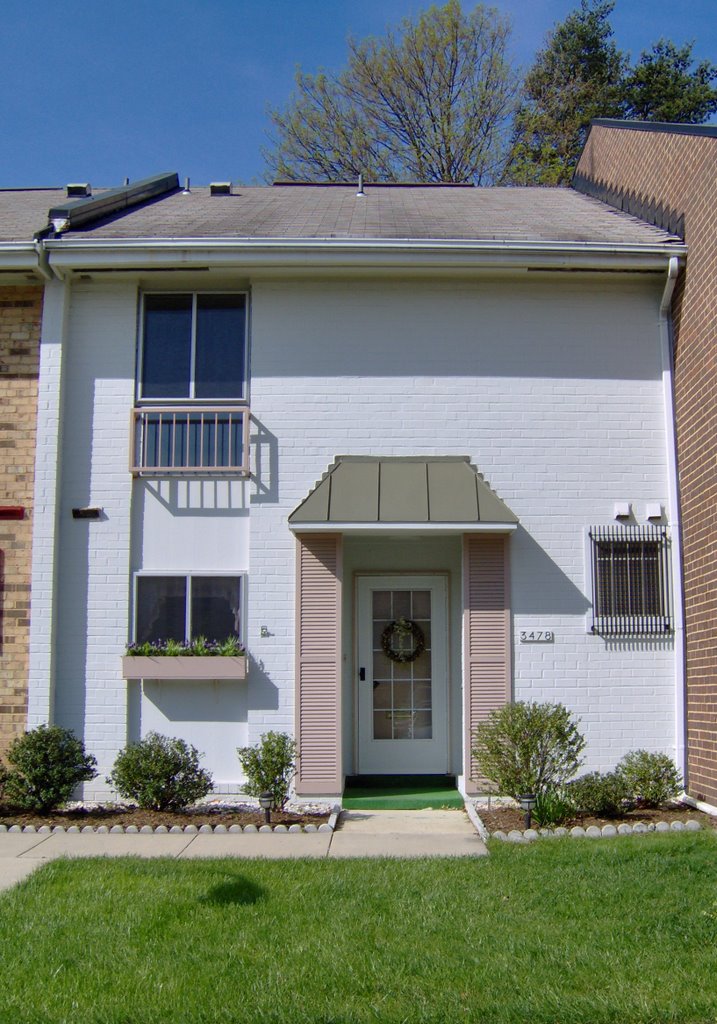
    There's no place like Leisure World - especially at the unbelievably low price of $239,900. Where else in the D.C. area can you find a home this nice AND this affordable?


    Just imagine life in a gated community, where you can feel safe going for a walk. Not only that, but you can step out your back door onto the "Broadwalk" - a paved walking path that winds through the community.

    The golf course, swimming pool, and one of two club houses are located just blocks away. If you want, you can eat in the club house once or twice a day and never have to cook. And you could use your own golf cart to get around the community (you have your own private golf cart parking pad next to the screened porch). Places of worship are located in and adjacent to the community, there's a community medical center, and Leisure World Shopping Plaza is just outside the front gates.

    Home maintenance is easy - everything is included in your monthly co-0p fee, even repairs and replacements of appliances and mechanicals. You won't have any separate utility bills, property tax bill, or first mortgage payment. This is a dream come true for people who hate to sit down and pay bills!

    This home is ready for you to move in - fresh paint throughout, new carpet throughout, new flooring, several new appliances, updated lighting... even new doorknobs. What more could you want?

    If you like to travel, or if your permanent home is in another State and you live here when you work in the D.C. area, this community makes it possible for you to be gone for long periods of time without worrying about your home.

    Take a look today. Contact me at mwoda@remax.net.

    January update: Property sold for $210,000. All cash. Settlement in 3 weeks.

    More information about this home, Leisure World of Maryland, Leisure World News, AARP, Olney, MD, Senior Housing - What You Should Know, Our Lady of Grace Church

    Feedback or more information:

    Over 55 - and loving it!

    Crofton Maryland Real Estate

    Copyright 2006. All rights reserved. Margaret Woda

    About Me

    My photo
    Crofton, Maryland, United States
    Helping home sellers, buyers and military personnel in the Annapolis/Baltimore/D.C. triangle is still my passion after thirty years in real estate. How can I help you?

    Blog Archive